
DWC Pipe it's Uses Specifications & Full Form
DWC pipes are primarily manufactured using High-Density Polyethylene (HDPE), a material known for its flexibility, chemical resistance, and long service life. Due to these properties, DWC pipes are highly suitable for underground installations across residential, commercial, and industrial projects.
DWC Pipe – Uses, Specifications & Full Form | Asian Corporation
In today’s rapidly growing infrastructure and utility development sector, underground piping systems must offer long-term durability, structural strength, and efficient performance. DWC pipes have emerged as one of the most reliable solutions for such applications. At Asian Corporation, we supply premium-quality DWC pipes designed to meet Indian infrastructure standards and diverse project requirements.
What Is a DWC Pipe?
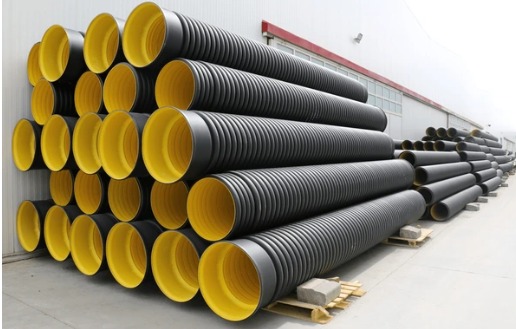
The DWC pipe full form is Double Wall Corrugated Pipe. These pipes are engineered with a dual-layer construction, where the outer wall is corrugated to provide mechanical strength and resistance against external loads, while the inner wall is smooth to allow uninterrupted fluid or cable flow.
DWC pipes are primarily manufactured using High-Density Polyethylene (HDPE), a material known for its flexibility, chemical resistance, and long service life. Due to these properties, DWC pipes are highly suitable for underground installations across residential, commercial, and industrial projects.
DWC Pipe Full Form Explained in Detail
DWC = Double Wall Corrugated
This construction ensures:
- High ring stiffness to withstand soil and traffic loads
- Low friction losses for efficient flow
- Excellent performance even in challenging underground conditions
At Asian Corporation, our DWC pipes are sourced and supplied with strict quality parameters to ensure consistent performance and long-term reliability.
DWC Pipe Used For – Applications
- DWC pipes are widely used across multiple sectors due to their versatility and strength.
- In drainage systems, DWC pipes are commonly installed for stormwater drainage, rainwater harvesting pipelines, and road or highway drainage networks. Their corrugated structure allows them to handle heavy external loads without deformation.
- For sewerage and wastewater management, DWC pipes are used in underground sewage pipelines, municipal sewer systems, and industrial wastewater disposal. The smooth inner surface reduces blockage risks and improves flow efficiency over long distances.
DWC Pipe Specifications
Understanding DWC pipe specifications helps in selecting the right product for specific site conditions.
At Asian Corporation, DWC pipes typically feature:
- Material: High-Density Polyethylene (HDPE)
- Construction: Double wall – corrugated exterior, smooth interior
- Diameter Range: From 40 mm to 1200 mm (as per requirement)
- Standard Length: 6 meters (custom lengths available for projects)
- Ring Stiffness: SN4 and SN8, depending on load conditions
- Color: Black outer wall with blue or yellow inner wall
- Jointing System: Push-fit socket joint with rubber sealing ring
These specifications ensure leak-proof connections, easy installation, and long-term underground performance.
Key Advantages of DWC Pipes
DWC pipes offer several advantages over conventional piping systems. Their lightweight nature reduces handling and installation costs, while their flexibility allows them to absorb minor ground movements without cracking. Unlike concrete or metal pipes, DWC pipes are corrosion-resistant, making them suitable for aggressive soil and wastewater environments.
With a service life exceeding 50 years, DWC pipes require minimal maintenance and provide excellent value for infrastructure investments.
Why Choose DWC Pipes from Asian Corporation?
At Asian Corporation, we understand the demands of Indian infrastructure projects. Our DWC pipes are supplied with a focus on quality consistency, compliance with industry standards, and application-specific suitability. We support builders, contractors, and infrastructure developers with expert guidance, competitive pricing, and reliable supply timelines.